

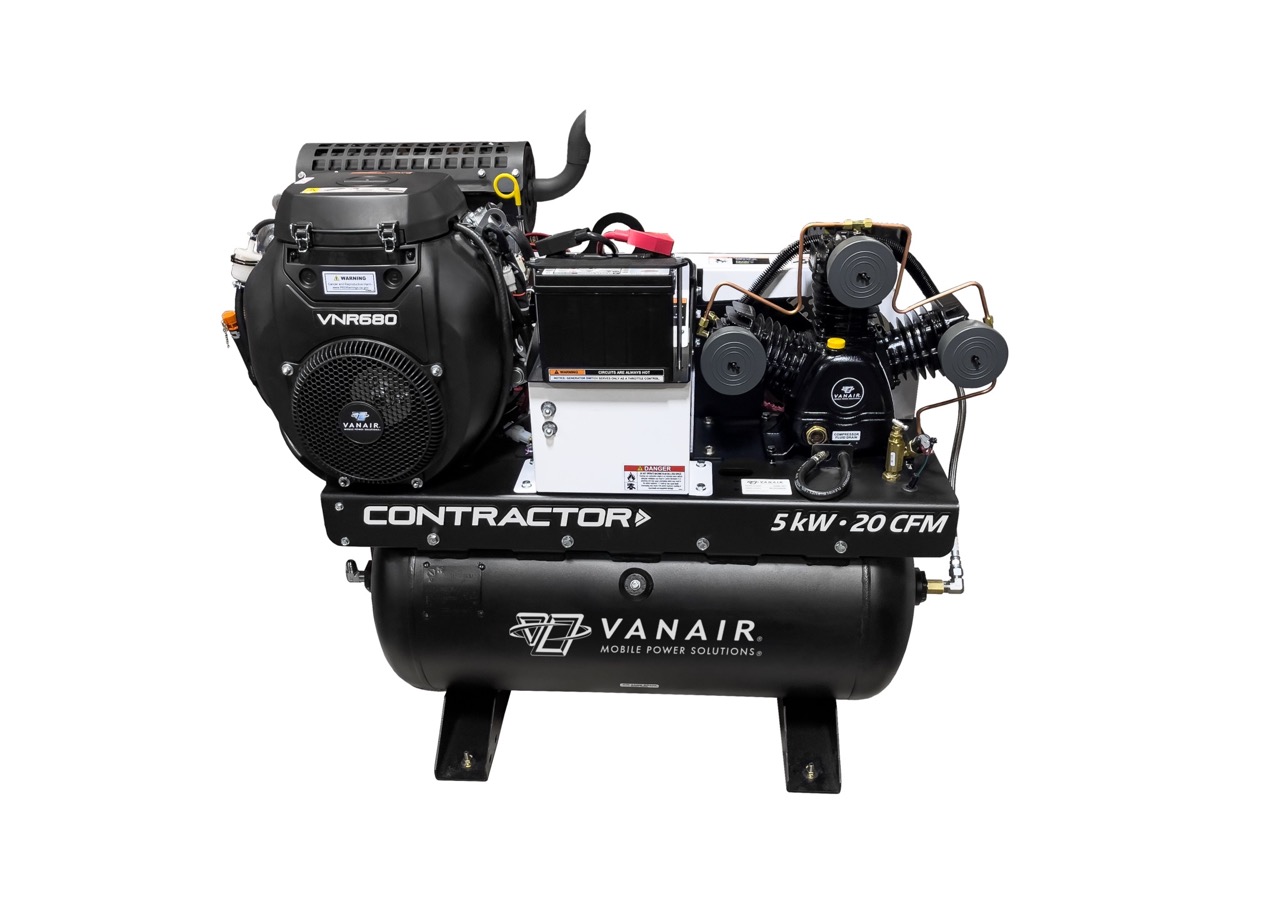
Choosing the right air compressor for your service truck is one of the most important investments you’ll make for your mobile business. Whether you’re running impact wrenches, inflating heavy equipment tires, or operating pneumatic tools, the right setup ensures you aren’t left waiting for air to build up.
In this guide, we break down the VMAC vs. Vanair debate, explain why the type of compressor matters, and help you calculate exactly how much CFM you need.
VMAC vs. Vanair: Which is Right for You?
When it comes to a truck-mounted air compressor, two names dominate the industry: VMAC and Vanair. Both are high-quality, but they serve different needs.
VMAC (Vehicle Mounted Air Compressor)
Known for being the space savers. VMAC specializes in Underhood and OEM-integrated systems. If you want to keep your truck bed completely clear for parts and tools, a VMAC Underhood system is the gold standard. They are incredibly lightweight and powerful.
Vanair
The multi-tasker air compressor, Vanair excels in all-in-one units. They often combine a compressor, a generator, and a welder into a single footprint. If you need a versatile powerhouse that sits on your side pack or in the bed, Vanair is often the go-to choice.
The Verdict? Choose VMAC if weight and bed space are your primary concerns. Choose Vanair if you want a multi-function machine that handles air, power, and welding simultaneously.
Rotary Screw vs. Reciprocating: Performance Matters
How the air is actually compressed makes a massive difference in your daily workflow.
Reciprocating (Piston) Compressors
These work like a car engine with pistons going up and down. They are generally more affordable upfront but have a limited duty cycle. This means they need “rest periods” to cool down. If you use air only occasionally, a piston compressor is fine.
Rotary Screw Compressor
These use two interlocking rotors to push air through. They offer a 100% duty cycle, meaning they can run all day without stopping. They are quieter, last longer, and provide air instantly.
Why does it matter? On a busy job site, waiting for a piston compressor to “catch up” costs you money. For professional service trucks, a rotary screw compressor is almost always the better long-term investment.
How Much CFM do I Need?
CFM (Cubic Feet per Minute) measures the volume of air the compressor produces. To find your magic number, look at the tool in your kit that requires the most air.
Common CFM Requirements
| Tool Type | Average CFM @ 90 PSI |
| 1/2” Impact Wrench | 4–5 CFM |
| 3/4” Impact Wrench | 8–12 CFM |
| 1” Impact Wrench | 12–20 CFM |
| 7” Angle Grinder | 5–8 CFM |
| Jackhammers/Pavement Breakers | 30–90+ CFM |
Pro Tip: If you plan to run multiple tools at once, add their CFM requirements and multiply by 1.25 for a safety buffer.
For most general service trucks, a compressor producing 30–40 CFM is the “sweet spot” that handles almost any handheld tool. If you are doing heavy OTR tire work or sandblasting, you’ll want to look at units pushing 60+ CFM.
Ready for an Upgrade? We’ve Got You Covered
At Trucks For Less, we know that your truck is your office. Choosing the right air compressor for your service truck means less downtime and more profit. For our team, outfitting service trucks is more than a job—it’s an obsession, and we take pride in doing it right.
For help finding the right compressor for your mobile workstation, contact Trucks For Less today!


